

Queen Anne's Lace vs. Poison Hemlock: Unveiling Nature's Delicate Beauty and Sinister Intruder in Missouri
Wed, 06/14/2023 - 11:27am
admin
By:
Susan Hickey, contributing writer
In the lush landscapes of Missouri, where the wonders of nature abound, two distinct white-flowered plants capture our attention with their lovely appearances and contrasting characteristics -- Queen Anne's Lace and Poison Hemlock, both members of the Apiaceae family, may share a resemblance at first glance, but their true nature and effects couldn't be more different. As we explore the world of herbalism, let us unravel the mystery behind these botanical wonders and shed light on their nutritional aspects.
Queen Anne's Lace: A Wildflower's Serenade
Queen Anne's Lace, scientifically known as Daucus Carota, stands as an enchanting wildflower, decorating meadows, roadsides, and open fields throughout Missouri. Its lacy white blossoms, arranged in delicate clusters, give it quite the elegant appearance of lace embroidery, hence its poetic name.
Herbalists have long recognized Queen Anne's Lace for its medicinal properties. Traditionally, it has been used to treat a variety of ailments, including urinary disorders, menstrual irregularities, and digestive issues. The roots of this wildflower are rich in nutrients, particularly beta-carotene, vitamin C, and dietary fiber. It also contains vitamin K, along with minerals like potassium and calcium, contributing to its nutritional value.
The edible young leaves of Queen Anne's Lace offer a tangy, carroty flavor, making them a delightful addition to salads and other culinary creations. Its flowers are sometimes used as a garnish, adding a touch of beauty to dishes. *
Poison Hemlock: A Deadly Intruder
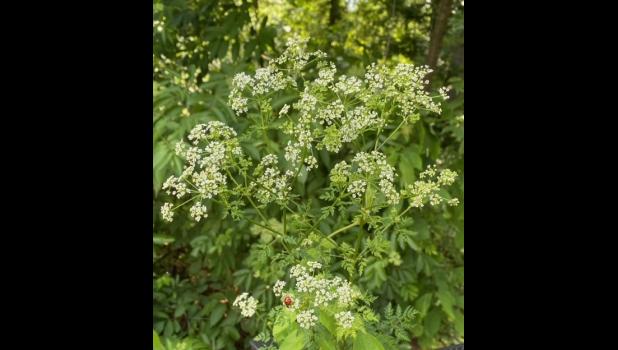
Also, amid the natural beauty of Missouri lurks a sinister interloper known as Poison Hemlock, scientifically classified as Conium Maculatum. While its white flowers might bear a resemblance to Queen Anne's Lace, a closer view reveals the true danger within.
Poison Hemlock possesses a deadly toxin called coniine, which affects the central nervous system and can be fatal if ingested in certain quantities. Even slight contact with the plant's sap can cause rapid and severe skin irritation, making it crucial to exercise caution when encountering this plant.
It is vital to note that Poison Hemlock has NO nutritional value and is NOT safe for consumption. Its primary purpose is to serve as a striking reminder of the importance of accurate identification and responsible foraging practices.
Differentiating Factors: An Herbalist's Perspective
While Queen Anne's Lace and Poison Hemlock may appear similar in certain respects, there are clear distinguishing factors that herbalists use for identification and understanding their contrasting properties.
1. Appearance: Queen Anne's Lace features a single dark purple flower at the center of its cluster, commonly referred to as a "button." In contrast, Poison Hemlock lacks this central flower, resulting in a more uniform appearance.
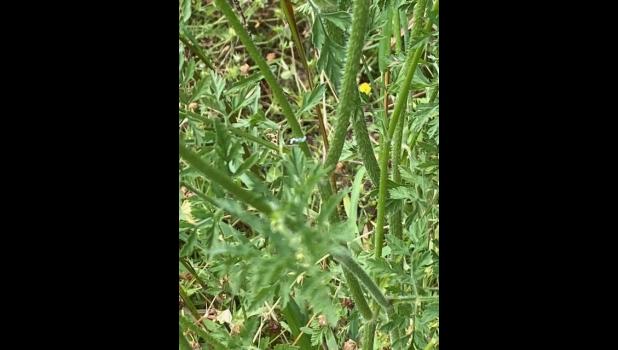
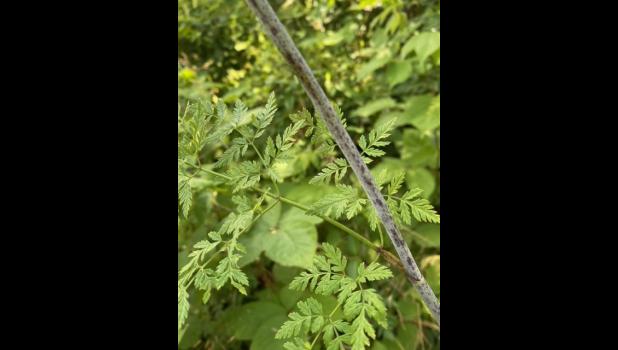
2. Stem Characteristics: Queen Anne's Lace exhibits a hairy stem with a reddish-purple hue, whereas Poison Hemlock has a smooth, hollow stem with red or purple spots or streaks. A helpful phrase this herbalist learned to help with identification after relocation to the Ozarks was “The queen has hairy legs.”
While comical, the phrase sticks in the mind.
3. Smell: Queen Anne's Lace emanates a delicate, carrot-like aroma when its leaves or stems are crushed. In contrast, Poison Hemlock has an unpleasant odor, often likened to mice or musty hay.
In the inviting tapestry of Missouri's flora, Queen Anne's Lace and Poison Hemlock stand as prime examples of nature's artistry and cautionary tales. While Queen Anne's Lace entices us with its delicate beauty and offers potential health benefits, Poison Hemlock serves as a reminder to tread carefully and respect the natural world.
As herbalists and residents of the area, it is our responsibility to nurture our understanding of these plants, ensuring accurate identification and safe practices.
*It is important to note that while Queen Anne's Lace is generally safe for consumption, individuals with specific medical conditions or allergies should
exercise caution and consult with a healthcare professional or herbalist before incorporating it into their diet.
###
Susan Hickey is an herbalist located in the West Plains area and is currently completing her studies as a Clinical Herbalist. She and her husband, Jason, along with their kids, moved to the Ozarks in 2019, and have profound love for nature, farming and family. Most days, in addition to her full-time job, you can find her crafting soaps, salves, tinctures, or relaxing with her love of books and crochet work.